
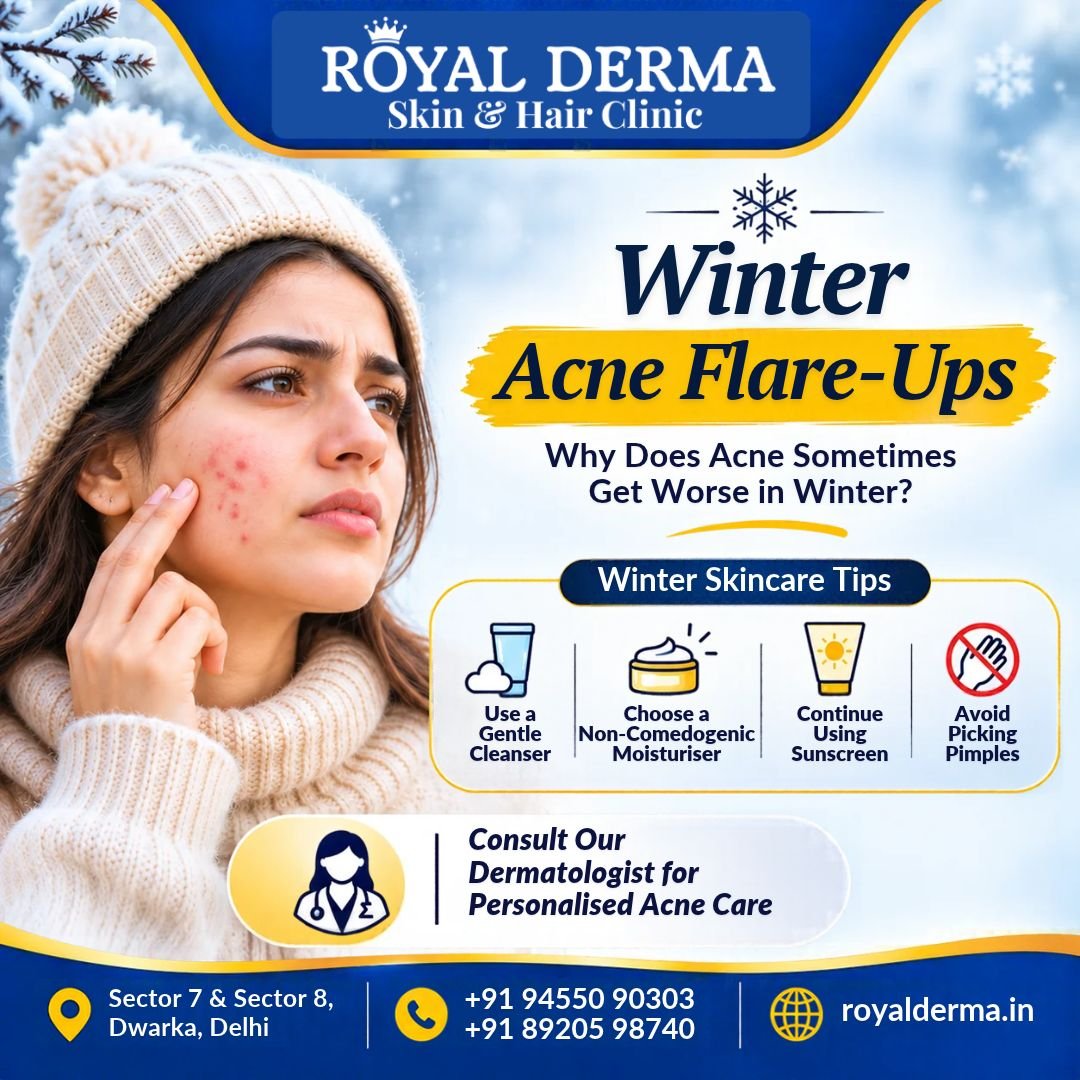
Winter brings cooler temperatures, dry air and changes in our daily skincare habits. While many people associate acne with hot and humid weather, some also notice more breakouts during the colder months.
If you are experiencing pimples, clogged pores or irritated skin this winter, your skincare routine may need some attention. Understanding the possible reasons behind winter acne flare-ups can help you take better care of your skin.
Can Winter Make Acne Worse?
Winter does not directly cause acne, but seasonal changes can affect the skin. Cold weather and low humidity may contribute to dryness, while indoor heating and hot showers can further reduce skin moisture.
Some people respond to dryness by using heavier moisturisers or multiple skincare products. If these products are unsuitable or pore-clogging, they may contribute to breakouts.
Changes in the skin barrier and irritation from harsh skincare products can also make existing skin concerns more noticeable.
5 Common Reasons Behind Winter Acne Flare-Ups
1. Dry Skin and Moisture Loss
Cold weather and dry indoor air can leave the skin feeling tight or uncomfortable. When the skin becomes dry, it is important to maintain hydration with a suitable moisturiser.
However, using products that are too heavy or unsuitable for your skin may contribute to clogged pores in some individuals.
2. Using Heavy Skincare Products
During winter, many people switch to thicker creams and moisturisers. While moisturising is important, not every product is suitable for acne-prone skin.
Look for products labelled non-comedogenic, which are formulated to reduce the likelihood of clogged pores.
3. Harsh Cleansers and Excessive Washing
Using strong face washes or washing your face too frequently can irritate the skin and remove its natural protective oils.
A gentle cleanser is generally a better choice, especially if your skin feels dry or sensitive during winter.
4. Changes in Skincare Routine
Adding several new skincare products at once can make it difficult to identify what is causing irritation or breakouts.
Introducing products gradually and keeping your routine simple can help you understand how your skin responds.
5. Skin Barrier Disruption
The skin barrier helps retain moisture and protect the skin from external irritants. Excessive exfoliation, harsh products and environmental factors may disrupt this protective layer.
When the skin becomes irritated, it may feel dry, sensitive or uncomfortable. Appropriate skincare can help support the skin barrier.
Winter Skincare Tips for Acne-Prone Skin
Taking care of acne-prone skin during winter does not require a complicated routine. A few consistent habits can help maintain skin comfort and hydration.
1. Use a Gentle Cleanser
Choose a mild face cleanser that removes dirt and excess oil without leaving your skin feeling tight or excessively dry.
2. Choose a Non-Comedogenic Moisturiser
Moisturising is important even if you have oily or acne-prone skin. Select a suitable non-comedogenic moisturiser based on your skin’s needs.
3. Do Not Skip Sunscreen
UV exposure can occur throughout the year. Use a broad-spectrum sunscreen with SPF 30 or higher during the day and follow its application instructions.
4. Avoid Excessive Exfoliation
Using too many exfoliating products may irritate your skin. Avoid combining multiple strong active ingredients without professional guidance.
5. Avoid Picking or Squeezing Pimples
Picking pimples can increase irritation and the risk of marks or scarring. Allow blemishes to heal and seek appropriate advice if acne persists.
Does Winter Acne Need Dermatologist Treatment?
Not every pimple requires medical treatment. However, recurring, persistent or inflamed acne may need professional evaluation.
A dermatologist can assess your skin, understand the type and severity of acne, and recommend suitable treatment options.
Depending on the individual’s condition, acne care may involve:
- Topical acne medications.
- Prescription treatments when appropriate.
- A skincare routine suited to your skin type.
- Evaluation of acne marks and post-acne pigmentation.
- Follow-up to monitor the skin’s response to treatment.
The right treatment depends on the type of acne, medical history and individual skin requirements. Avoid starting prescription acne medicines without consulting a qualified dermatologist.
When Should You Visit a Skin Specialist?
Consider consulting a dermatologist if you notice:
- Frequent or recurring acne breakouts.
- Painful or inflamed pimples.
- Acne that leaves persistent marks or scars.
- Skin irritation after using skincare products.
- Breakouts that do not improve with your regular skincare routine.
Early evaluation can help identify the type of acne and prevent unsuitable self-treatment.
Acne Consultation at Royal Derma Skin & Hair Clinic, Dwarka
If you are searching for acne treatment in Dwarka, Delhi, Royal Derma Skin & Hair Clinic provides dermatology consultation for acne, skin irritation, pigmentation and other skin-related concerns.
Our approach focuses on understanding your skin concerns and discussing suitable treatment options after a professional assessment.
Whether you experience occasional winter breakouts or persistent acne, a dermatologist consultation can help you understand your skin better.
Remember:
Healthy skincare is about consistency, suitable products and professional guidance when needed. There is no single skincare routine that works for everyone.
Frequently Asked Questions About Winter Acne
1. Why do I get more pimples in winter?
Dry air, skin irritation, changes in skincare habits and unsuitable moisturising products may contribute to breakouts in some individuals. Winter itself is not a direct cause of acne.
2. Should I use moisturiser if I have acne-prone skin?
Yes, moisturising can still be important. Choose a lightweight, non-comedogenic moisturiser that suits your skin.
3. Can dry skin cause acne?
Dryness does not directly cause acne. However, irritation and unsuitable skincare products used to manage dryness may contribute to breakouts in some people.
4. Should I stop using sunscreen in winter?
No. UV exposure can occur throughout the year. Continue using a suitable broad-spectrum sunscreen during the day.
5. Which doctor should I consult for winter acne?
A qualified dermatologist can evaluate acne, identify possible contributing factors and recommend appropriate treatment based on your skin condition.
6. Where can I consult an acne specialist in Dwarka, Delhi?
You can contact Royal Derma Skin & Hair Clinic at its Sector 7 and Sector 8 locations in Dwarka, Delhi, for appointment information.
Consult a Dermatologist for Acne in Dwarka, Delhi
Royal Derma Skin & Hair Clinic
MEDICAL | COSMETIC | LASER | HAIR TRANSPLANT
Sector 7 Clinic:
Ground Floor, Rohit Plaza, E-517, Ramphal Chowk Road, Block E, Sector 7, Dwarka, Delhi – 110075.
Sector 8 Clinic:
1st Floor, Plot No. 1, Near Yadav Bhawan, Bagdola, Sector 8, Dwarka, New Delhi – 110077.
Call for Appointment:
+91 94550 90303
+91 89205 98740
Website:
www.royalderma.in
Disclaimer: This article is for general educational purposes only and is not a substitute for professional medical diagnosis or treatment. Treatment suitability and results vary between individuals.