
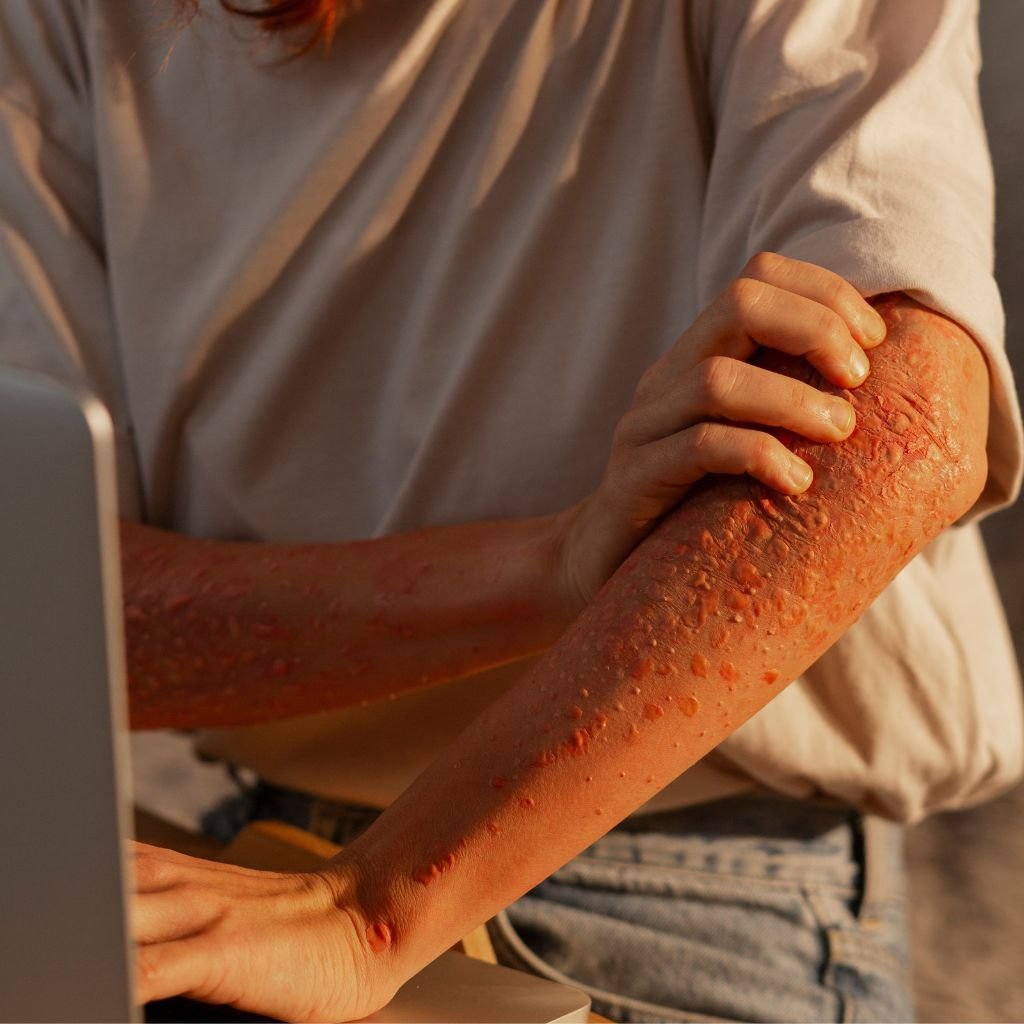
Best Psoriasis Treatment in Dwarka, Delhi.
Psoriasis Treatment: Managing the Condition for a Better Life
Psoriasis is a chronic autoimmune skin condition characterized by red, scaly patches. While there is no cure, various treatments can help manage symptoms, reduce inflammation, and improve quality of life.Types of Psoriasis: Understanding the Different Forms of the Condition
Psoriasis is a chronic autoimmune skin condition that comes in several forms, each with distinct characteristics and symptoms.Main Types of Psoriasis:
1. Plaque Psoriasis: Most common form, characterized by red, scaly patches (plaques) on the skin. 2. Guttate Psoriasis: Small, pink spots on the skin, often triggered by bacterial infections. 3. Inverse Psoriasis: Smooth, red patches in skin folds (e.g., armpits, groin). 4. Pustular Psoriasis: White, pus-filled blisters on the skin, often accompanied by redness and scaling. 5. Erythrodermic Psoriasis: Widespread redness, scaling, and inflammation, potentially life-threatening. 6. Psoriatic Arthritis: Joint pain, stiffness, and swelling, often accompanied by skin symptoms. 7. Nail Psoriasis: Changes in nail texture, color, or shape, such as pitting, thickening, or separation from the nail bed. 8. Scalp Psoriasis: Red, scaly patches on the scalp, often accompanied by hair loss. 9. Palmar-Plantar Psoriasis: Thick, scaly patches on the palms and soles. 10. Acrodermatitis Continua: Rare, severe form of pustular psoriasis affecting the fingertips and toes. Other Forms of Psoriasis: 1. Annular Psoriasis: Ring-shaped patches on the skin. 2. Follicular Psoriasis: Small, red bumps around hair follicles. 3. Linear Psoriasis: Psoriasis patches in a linear pattern. 4. Segmental Psoriasis: Psoriasis patches limited to one area of the body.Goals of Psoriasis Treatment:
1. Reduce inflammation and scaling 2. Slow down skin cell growth 3. Remove plaques and scales 4. Prevent further flare-ups 5. Improve overall skin healthTreatment Options:
1. Topical treatments: Creams, ointments, and lotions applied directly to the skin 2. Light therapy: Exposure to specific wavelengths of light, such as UVB or laser 3. Systemic medications: Oral or injected drugs that target the immune system 4. Biologics: Targeted therapies that block specific proteins involved in inflammation 5. Lifestyle modifications: Dietary changes, stress management, and regular exerciseTreatment Approaches:
1. Mild psoriasis: Topical treatments and lifestyle changes 2. Moderate psoriasis: Combination of topical and light therapy 3. Severe psoriasis: Systemic medications, biologics, or combination therapyEffective management of psoriasis requires a comprehensive approach, including:
1. Regular consultations with a healthcare professional 2. Monitoring for side effects and treatment adjustments 3. Lifestyle changes to reduce triggers and flare-ups 4. Patient education and support for optimal treatment outcomes
5/5 - (1 vote)