
ROYAL DERMA SKIN & HAIR CLINIC
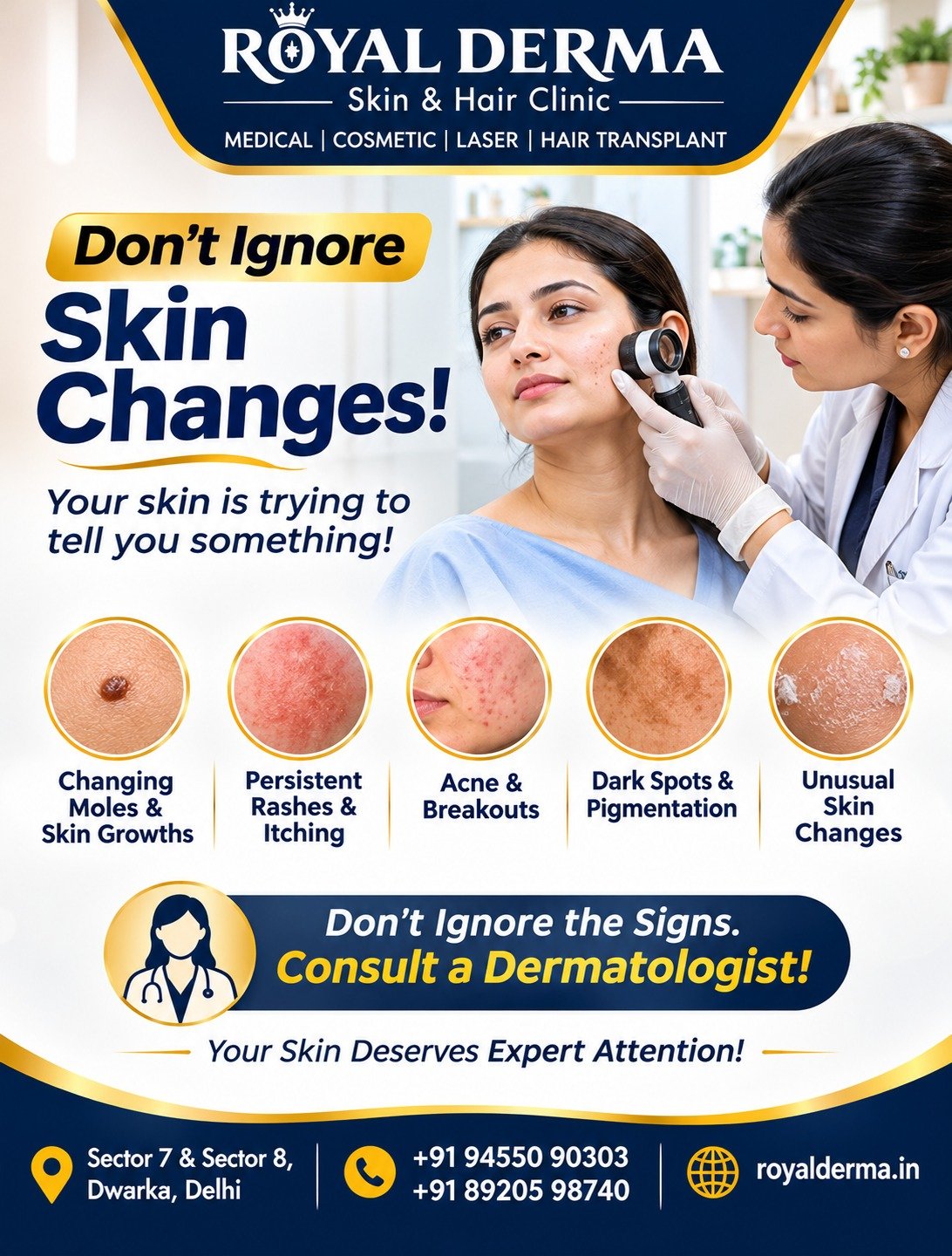
Don’t Ignore Skin Changes! Signs That Need a Dermatologist’s Attention
Your skin can show changes that deserve attention. Learn about common skin concerns and when professional dermatological evaluation may help.
Your skin is one of the most visible indicators of your overall skin health. Changes such as new spots, persistent itching, unusual rashes, acne and pigmentation can occur for different reasons.
While many skin changes are harmless, some may require professional attention. If you are looking for a dermatologist in Dwarka, Delhi, understanding these signs can help you know when to seek an expert opinion.
Why Is It Important to Pay Attention to Skin Changes?
Skin concerns can develop gradually or appear suddenly. Some may be temporary, while others can persist or change over time.
Ignoring persistent or unusual changes may delay proper evaluation. A dermatologist can examine the affected area, understand your symptoms and recommend further assessment or treatment when appropriate.
5 Common Skin Changes You Should Not Ignore
1. Changing Moles and Skin Growths
Moles are common, but a mole that changes in size, shape or colour deserves attention. New or changing skin growths should also be evaluated by a dermatologist.
Look out for: Changes in appearance, irregular borders, multiple colours, bleeding or a spot that does not heal.
2. Persistent Rashes and Itching
Rashes and itching may occur due to several factors, including irritation, allergies, eczema and other skin conditions.
Look out for: Recurring rashes, persistent itching, redness, scaling or irritation that does not improve.
3. Acne and Frequent Breakouts
Acne can affect people of different ages. It may appear as pimples, blackheads, whiteheads or deeper inflammatory lesions.
Look out for: Persistent breakouts, painful acne, recurring inflammation or marks left after acne heals.
4. Dark Spots and Pigmentation
Dark spots and uneven skin tone can develop due to sun exposure, previous inflammation, hormonal influences and other causes.
Look out for: New patches, spreading pigmentation or dark spots that change in appearance.
5. Unusual Dryness, Scaling or Skin Texture Changes
Dryness and rough skin may be related to weather, skincare products or underlying skin conditions.
Look out for: Persistent scaling, cracking, irritation, thickened areas or texture changes that continue over time.
When Should You Consult a Dermatologist?
Consider arranging a dermatological evaluation if you notice:
- A mole or skin spot that is changing in appearance.
- A new growth, a spot that bleeds or a sore that does not heal.
- Persistent or recurring itching and rashes.
- Acne that continues or causes discomfort.
- New or spreading pigmentation.
- Skin changes that are unexplained or concerning.
Seek prompt medical assessment for a rapidly changing or bleeding skin lesion. A dermatologist can decide whether further examination or testing is needed.
How Does a Dermatologist Evaluate Skin Changes?
A dermatological consultation generally begins with a discussion about your symptoms, when the changes started and whether they have progressed.
Depending on the concern, the dermatologist may:
- Review your skin and medical history.
- Examine the affected skin area.
- Use a dermatoscope to examine selected moles or skin lesions.
- Recommend additional tests or procedures if clinically appropriate.
- Discuss a suitable treatment or follow-up plan.
Tips to Support Everyday Skin Health
Healthy skincare habits can support your skin’s natural barrier and help reduce avoidable irritation.
- Use a gentle cleanser suitable for your skin.
- Apply a suitable moisturiser regularly.
- Use broad-spectrum sunscreen and reapply as directed.
- Avoid picking acne or irritating skin lesions.
- Avoid using strong skincare products without understanding their suitability.
- Pay attention to new or changing skin spots.
Dermatology Consultation at Royal Derma Skin & Hair Clinic
If you are looking for a skin clinic in Dwarka, Delhi, Royal Derma Skin & Hair Clinic offers dermatology consultation and care for various skin concerns.
Depending on the individual’s condition and professional assessment, areas of care may include:
- Acne and acne-related concerns.
- Pigmentation and uneven skin tone.
- Selected allergic and inflammatory skin conditions.
- Mole and skin lesion evaluation.
- Dryness, itching and recurring rashes.
- Cosmetic dermatology and skin care consultation.
The appropriate evaluation and treatment plan depend on the individual’s skin condition and medical needs.
Frequently Asked Questions
1. Which skin changes should I get checked?
Changing moles, new skin growths, persistent rashes, unexplained pigmentation and spots that bleed or do not heal should be assessed by a medical professional.
2. Are all changing moles dangerous?
No. Many moles are harmless. However, changes in size, shape, colour or appearance should be evaluated by a dermatologist.
3. Can pigmentation have different causes?
Yes. Pigmentation may be associated with sun exposure, hormonal influences, inflammation and other skin-related factors. The cause can be assessed during a consultation.
4. When should I consult a dermatologist for itching?
Consult a dermatologist if itching is persistent, recurring, unexplained or accompanied by a rash or other skin changes.
5. Where can I consult a dermatologist in Dwarka, Delhi?
You can contact Royal Derma Skin & Hair Clinic at its Sector 7 and Sector 8 locations in Dwarka, Delhi, for consultation-related information.
Don’t Ignore the Signs. Give Your Skin Expert Attention!
Have a skin concern? Connect with Royal Derma Skin & Hair Clinic to discuss a professional dermatology consultation.
Sector 7 Clinic
Ground Floor, Rohit Plaza, E-517, Ramphal Chowk Road, Block E, Sector 7, Dwarka, Delhi – 110075.
Sector 8 Clinic
1st Floor, Plot No. 1, Near Yadav Bhawan, Bagdola, Sector 8, Dwarka, New Delhi – 110077.
Contact Numbers +91 94550 90303 | +91 89205 98740
Website : www.royalderma.in