
ROYAL DERMA SKIN & HAIR CLINIC
Hair Transplant in Dwarka, Delhi: Procedure, Recovery and Expected Results
Experiencing hair thinning or hair loss? A hair transplant may be an option for suitable individuals. Learn how the procedure works, who may benefit, what recovery involves and why a professional hair and scalp assessment is important before treatment.
Hair loss can occur for several reasons, including hereditary hair loss, certain medical conditions, hormonal changes and other factors. When hair thinning becomes noticeable, understanding the underlying cause is an important first step towards choosing an appropriate treatment.
Hair transplant in Dwarka, Delhi is a search term used by people exploring hair restoration options close to home. A hair transplant is a surgical procedure that moves hair follicles from a donor area, commonly the back or sides of the scalp, to areas affected by hair loss.
At Royal Derma Skin & Hair Clinic, individuals can enquire about hair restoration and arrange a consultation to discuss their concerns, treatment suitability and expected outcomes.
Why Is a Hair Assessment Important?
Not every type of hair loss requires a transplant. A professional assessment can help identify possible causes of hair loss, evaluate donor hair availability and determine whether surgical or non-surgical options are more appropriate.
What Is a Hair Transplant?
Hair transplantation is a surgical hair restoration procedure in which hair follicles are taken from a donor area and implanted into selected areas where hair density has reduced. The aim is to create a hairline and hair distribution suited to the individual’s scalp, facial features and available donor hair.
The suitability of a hair transplant depends on several factors, including the pattern and cause of hair loss, scalp health, donor hair density, age, medical history and future hair-loss risk.
Common Hair Transplant Techniques
FUE Hair Transplant
Follicular Unit Extraction (FUE) involves removing individual follicular units from the donor area and placing them in the recipient area. It generally leaves small extraction marks rather than one long linear scar.
FUT Hair Transplant
Follicular Unit Transplantation (FUT) involves removing a strip of scalp from the donor area and separating it into follicular units for transplantation. It typically leaves a linear scar.
The appropriate technique depends on the individual’s needs, donor characteristics, clinical assessment and the treating surgeon’s recommendation. Not every technique is suitable for every person.
How Does the Hair Transplant Procedure Work?
A hair transplant generally involves several stages. The exact process can vary according to the selected technique and individual treatment plan.
Consultation and Assessment
The clinician reviews your hair-loss pattern, scalp condition, medical history and donor hair availability.
Hairline and Treatment Planning
The proposed hairline, recipient area and estimated number of grafts are planned according to individual requirements and donor capacity.
Follicle Extraction and Placement
Depending on the technique, follicular units are harvested and placed into the planned recipient areas by the surgical team.
Aftercare and Follow-Up
Post-procedure instructions and follow-up appointments help monitor healing and the progress of hair growth.
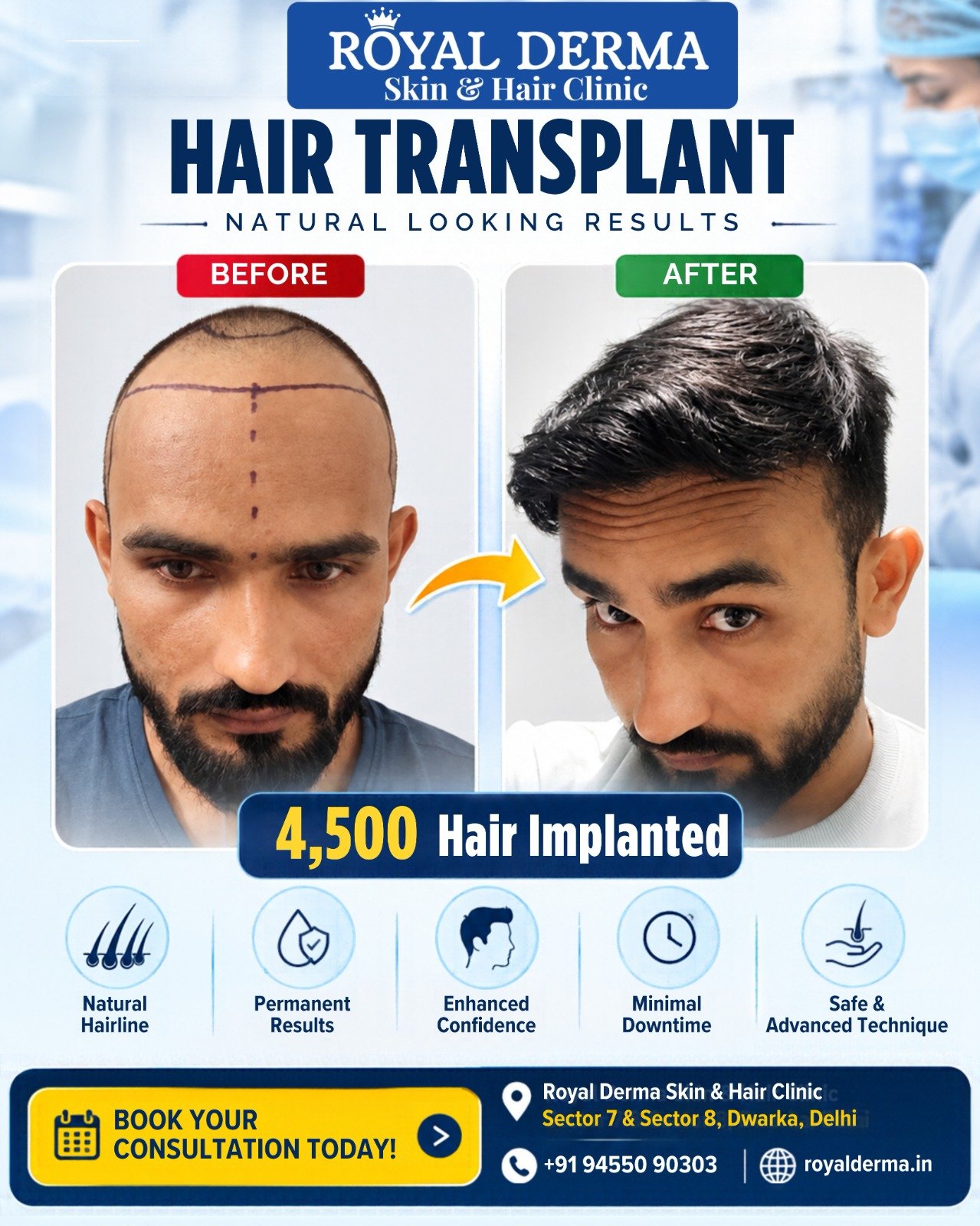
FEATURED HAIR RESTORATION CASE
4,500 Hair Implanted
Royal Derma’s featured hair transplant creative highlights a case described as involving 4,500 hair implanted. The meaning of this figure should be confirmed with the clinic’s treatment records, as hair counts and graft counts are not the same. Individual treatment plans and outcomes vary.
When Can You See Hair Transplant Results?
Hair transplant results develop gradually rather than immediately. The transplanted hairs may shed during the early healing period, which can be a normal part of the process. New growth typically becomes noticeable over the following months, with further changes occurring as the hair matures.
The timeline varies between individuals. The final appearance depends on factors such as graft survival, hair characteristics, donor hair quality, scalp health, the treatment technique and ongoing hair loss.
A hair transplant does not prevent all future hair loss in untreated areas. Your clinician may discuss additional hair-loss management options where appropriate.
Hair Transplant Recovery and Aftercare
Recovery depends on the procedure and individual healing response. Temporary swelling, redness, tenderness, scabbing or discomfort may occur after surgery. Your treating team should explain which symptoms are expected and when to seek medical advice.
Important Aftercare Tips
✔ Follow the treating surgeon’s washing and scalp-care instructions.
✔ Avoid rubbing, scratching or disturbing the treated area.
✔ Ask when you can resume exercise, work and normal activities.
✔ Attend scheduled follow-up appointments.
✔ Contact your treating team if you develop concerning or worsening symptoms.
Potential Benefits and Important Considerations
For appropriately selected individuals, hair transplantation may improve hair coverage in areas affected by certain types of hair loss. It can also help create a hairline designed around the person’s facial features and available donor hair.
However, it is a surgical procedure with potential risks, including infection, bleeding, scarring, temporary or persistent numbness, poor graft growth and an unnatural-looking result. A consultation should include a discussion of risks, expected outcomes, alternatives and costs.
Who May Be Suitable for a Hair Transplant?
Hair transplantation may be considered for selected people with a suitable pattern of hair loss and sufficient donor hair. Suitability cannot be determined by age or appearance alone.
People with unexplained, sudden or patchy hair loss, active scalp conditions or certain medical causes of hair loss may need further evaluation before considering surgery. In some cases, medical treatment or another approach may be more appropriate.
Why Choose a Professional Hair Transplant Consultation in Dwarka?
When comparing hair transplant clinics in Dwarka, Delhi, ask about the qualifications of the doctor performing the procedure, the surgical team’s role, hygiene and safety protocols, donor-area planning, aftercare and follow-up arrangements.
A useful consultation should provide realistic expectations rather than promise guaranteed density or a fixed result. It should also explain whether a transplant is suitable for your particular type of hair loss.
ROYAL DERMA SKIN & HAIR CLINIC
Explore Your Hair Restoration Options
Discuss your hair-loss concerns, donor hair suitability, treatment options and expected outcomes with the clinic before making a decision.
📍 Sector 7 & Sector 8, Dwarka, Delhi
📞 +91 94550 90303 | +91 89205 98740
🌐 www.royalderma.in
Frequently Asked Questions About Hair Transplant
1. How much does a hair transplant cost in Dwarka, Delhi?
The cost depends on the technique, number of grafts required, complexity of the case and the clinic’s treatment plan. Contact the clinic for an individual assessment and current pricing.
2. Is a hair transplant permanent?
Transplanted follicles may provide long-lasting growth, but outcomes vary and existing non-transplanted hair can continue to thin. A clinician can explain likely outcomes and ongoing hair-loss management.
3. How many grafts do I need for a hair transplant?
The number depends on the area to be covered, desired density, hair characteristics and donor hair availability. A clinical assessment is needed to estimate the number of grafts.
4. How long does it take to see hair transplant results?
Hair growth develops gradually over several months, and maturation can take longer. Your treating clinician can explain a realistic timeline for your procedure.
5. Is hair transplantation suitable for everyone?
No. Suitability depends on the cause of hair loss, scalp health, donor hair availability and general health. Some people may benefit more from medical management or another treatment.
6. Where can I enquire about hair transplant in Dwarka?
You can contact Royal Derma Skin & Hair Clinic at Sector 7 or Sector 8, Dwarka, Delhi, to enquire about consultation availability and hair restoration services.
Take the First Step Towards Understanding Your Hair Loss
Get your hair and scalp assessed and discuss the treatment options that may be appropriate for you.